
Fiberglass part making

Updated: Mar 17, 2021
In this tutorial series we will learn how to make simple fiberglass parts.

Introduction
Fiberglass is a very versatile material. Can replace steel, iron, aluminum and plastic parts in almost all applications.
It doesn't rust or rot in water.
It is much stronger and lighter than similar size steel and aluminum parts.
Can be molded to form channels as well as pipes, tubes, sheets etc.
Fiberglass parts can be made without any specific molding tools and equipments.
Fiberglass parts can be very easily made at home for any DIY projects or any small workshop.
Using this tutorial you can make larger and complex parts and molds from fiberglass.
In this tutorial we will make 2 parts one with first layer of gelcoat and one without.
The application of gelcoat will provide a good and glossy surface finish.
Without a layer of gelcoat there will be some imperfections and air bubbles on the surface of the part.
Materials required:
The mold can be made from most locally available materials like steel, aluminum, wood, MDF, plastic, mirror or glass etc.
But for best results we recommend using sheet of glass as mold surface.
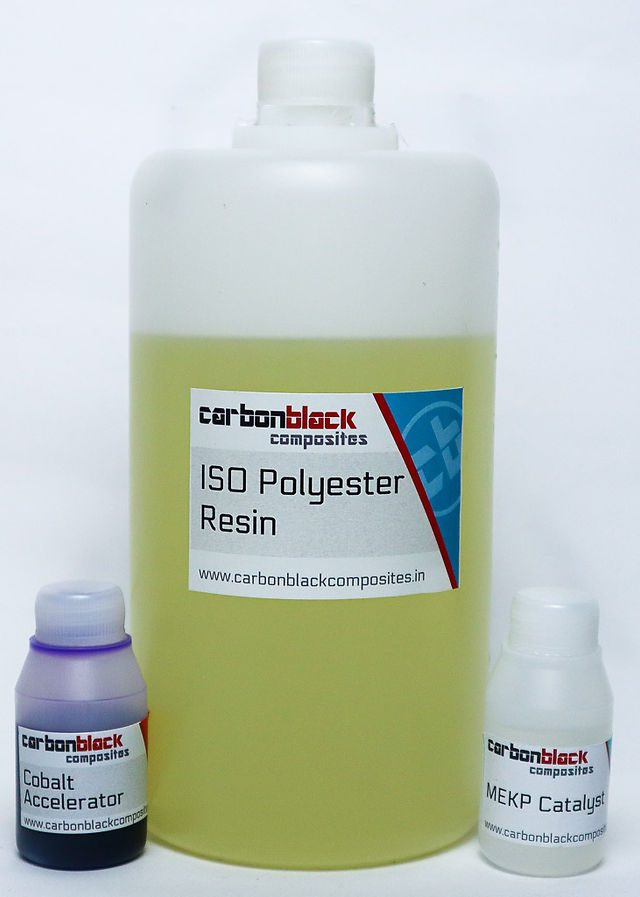
ISO polyester resin kit 
Fiberglass chopped strand mat 
Fiberglass cloth 
Fiberglass brushes 
Polyester gelcoat 
PVA mold release agent 
Mold release wax 
Fiberglass roller
In this tutorial we are using a sheet of glass for as a mold.
The part will have the surface finish of the mold. So incase the mold surface is glossy then the part will be glossy too.
Incase the surface finish of the mold is matt finished then the part will have similar finish as well.
Today we will make 2 sheets of fiberglass one with thickness of approximately 1mm and another with thickness of approximately 3mm.


Each sheet will be 6in x 6in
Using this method we can make sheets of fiberglass composite from as thin as 0.5mm to 25mm thick.
Step I: Mold preparation
Clean the mold ie. the sheet of glass using a chemical mold cleaner or soapy water and a micro fiber cloth
Step II: Application of release agent
Once dried off using a wax applicator sponge apply it to the mold surface.
Using a clean microfiber cloth buff off the dried wax from the surface of the mold.
Repeat this step 3 more times then let it dry for atleast 30mins.
Take a small quantity of PVA release agent in a cup.
Using a brush apply a very thin 'tack coat' on the mold surface. Let it dry.
Then apply a heavier coat of PVA using a brush. Once dried apply second coat of PVA for a good release.
Step III:
Gelcoat application
Using a weighing scale measure the required quantity of gelcoat in a cup.
Here we are using 50g of gelcoat.
To that we are adding 1ml of cobalt accelerator and mix well using a stick.
Once mixed well add 1ml of MEKP catalyst and mix well again.
Apply it an even layer about 0.3mm thick on the surface of the mold in the required size.
Let it dry to a tack state.

Step IV:
Fiberglass cutting
We are making 2 sheets of 3mm and 0.8mm each.
For 0.5mm we are laying 2 layers of 300gsm CSM\
And for 3mm sheet we will lay 2 layers of 300gsm CSM and 3 layers of 600gsm cloth.
Applying tape on the edge of the cloth will give a clean cut to the fabric and will be cut out once the part is fully cured.
We are cutting it a little larger than required part size.
As the final sheet size will be 6in x 6in we are cutting size of 8in x 8in
Step V:
Resin mixing
The amount of resin required for laminating fiberglass sheet will the approximately the double the weight of the fiberglass fabric.
Measure the fiberglass pieces cut earlier, then note it down.
The weight of the cut sheets of fiberglass is about 127g, so the will weigh out about 200g of ISO polyester resin.
In a mixing cup weigh about 200g of ISO polyester resin.
We will be using 2.5ml of cobalt accelerator, add it to the resin and mix very well.
Then measure 2.5ml of MEKP catalyst and add it to the resin again mix it very well.
Step VI:
For 0.8mm thickness sheet, using a fiberglass brush apply a thin layer of resin to the mold surface.
Then lay a sheet of 300gsm CSM on top of the resin. Apply resin to the fiberglass mat until it becomes saturated. When mat is saturated it becomes transparent.
Once the first mat is fully saturated lay another layer to it.
Apply resin to fully saturate it.
For 3mm sheet make sure the gelcoat has dried to a tack state. A tack state is where the gelcoat is dry to the touch but leaves an impression on the gelcoat layer.
apply a thin layer of the resin on the gelcoat, lay a sheet of 300gsm mat on top of it.
Using a fiberglass brush apply resin until the mat is completely saturated.
Lay another layer of the mat on and saturate with resin.
Then lay 600gsm cloth on top of it and again saturate with resin.
Repeat it 2 more times.
Step VII
Using a fiberglass roller roll it on the resin saturated fiberglass sheets.
Use the roll from the center outwards.
Do it for the entire surface area of the fiberglass sheet.
Using a roller will remove all the air bubbles from the sheet of fiberglass and will make a stronger and lighter final part.
Step VIII:
Now let the part cure for 24hours.
Once fully cured use a wedge to pry the part from the mold.
Clean the PVA from the part surface using a wash cloth and some soapy water.
The part can be cut and finished as well as painted on.

Trong quá trình đọc các thảo luận, mình có để ý thấy J88 được nhắc qua nên thử vào xem cho biết. Mình chỉ xem nhanh tổng thể chứ chưa tìm hiểu sâu, nhưng cảm giác ban đầu là cách trình bày khá thoáng, bố cục rõ ràng, nhìn vào không bị rối mắt.
Trước giờ mình ít để ý mấy nền tảng kiểu này, nhưng tình cờ thấy cm88 nên vào xem thử giao diện như thế nào. Điểm mình thấy ổn là cách họ trình bày khá thoáng mắt, không nhồi quá nhiều chi tiết vào một màn hình nên nhìn dễ chịu hơn. Các mục chính được đặt rõ ràng, thao tác chuyển đổi cũng nhanh nên dùng thử không bị rối. Mình có mở trên điện thoại thì mọi thứ vẫn hiển thị mượt và dễ thao tác. Tổng thể cảm giác khá gọn gàng, phù hợp với kiểu người thích giao diện đơn giản, dễ nhìn.
cakhiatvlink Một lần đọc phần giới thiệu ngắn của một bài viết được đề xuất, mình thấy có vài ý khá gần với vấn đề bản thân đang quan tâm nên quyết định mở trang để xem đầy đủ. Điều khiến mình có thiện cảm là nội dung không đi theo kiểu liệt kê thông tin khô khan mà được diễn giải khá nhẹ nhàng, giống như đang chia sẻ kiến thức với người đọc. Mỗi phần đều có trọng tâm riêng, nhờ vậy mình dễ nhận ra đâu là những điều cần chú ý. Có một số chi tiết trước đây mình chưa từng nghĩ đến, khiến bài viết trở nên thú vị hơn dự kiến. Mình cũng thích việc…
Trong quá trình mình quan sát fly88 trên thiết bị di động, mình nhận thấy khả năng tối ưu hiển thị được thực hiện khá hiệu quả. Các danh mục xổ số, slot game, game bài và bắn cá được trình bày gọn gàng giúp thao tác trở nên thuận tiện hơn. Mình thấy giao diện được tinh gọn hợp lý nên không gây cảm giác nặng khi sử dụng lâu. Trong lúc trải nghiệm mình thử xổ số và slot game thì tốc độ phản hồi nhanh, xử lý ổn định nên trải nghiệm khá mượt mà và dễ chịu
Mỗi khi rảnh, mình thường ghé các nền tảng giải trí trực tuyến để quan sát cách họ trình bày nội dung và bố cục tổng thể. Trước đây mình khá thoải mái với link, nhưng vài lần nhầm trang khiến mình chú ý hơn. NOHU90 là link mình dùng để kiểm tra thông tin chính thức, các mục từ hướng dẫn cơ bản đến lưu ý về giấy phép Curaçao và chuẩn bảo mật SSL 128-bit được sắp xếp dễ theo dõi. Đồng thời, mình vẫn tham khảo Nohu để nắm tổng quan.